


Views: 0 Author: Site Editor Publish Time: 2026-06-02 Origin: Site


Procuring a primary compressor demands significant capital expenditure. It heavily impacts daily operations at your fueling facility. You are making a critical infrastructure decision. Selecting the wrong unit quickly leads to severe dispensing bottlenecks. It can inflate monthly utility costs unexpectedly. Equipment failures during peak business hours cause catastrophic revenue loss. You need an objective framework to evaluate your options. We designed this guide to align technical specifications with your commercial realities. This approach helps you bypass sales rhetoric entirely.
You will learn how to match hardware to your specific station type. We explore core evaluation dimensions like inlet pressures and drive mechanics. You will discover how to navigate strict site infrastructure constraints. Finally, we cover strategies to future-proof your investment. Proper planning allows seamless integration for multi-fuel applications.
Station type dictates hardware: Fast-fill commercial stations require fundamentally different compressor sizing and storage configurations than time-fill fleet operations.
TCO matters more than CapEx: Upfront purchase price typically represents only 15-20% of a natural gas compressor’s lifetime cost; energy consumption and maintenance drive the rest.
Site constraints are the primary bottleneck: Available electrical supply, inlet gas pressure, and zoning for noise/vibration often eliminate certain compressor models before evaluation begins.
Future-proofing is essential: Anticipating integration with BOG, hydrogen, or LPG systems can prevent premature equipment obsolescence.
Selecting the right CNG Compressor begins with your business model. Retail stations operate very differently from private fleet depots. You must align your equipment with consumer expectations.
Public stations serve standard consumer vehicles and commercial trucks. Drivers expect a familiar refueling experience. They want to fill their tanks rapidly. You must complete transactions quickly to maintain traffic flow.
System Design: Fast-fill requires high-capacity compressors. You must pair them with extensive cascade storage cylinders.
Success Criterion: The ultimate goal is dispensing fuel in 3 to 5 minutes. This speed matches traditional gasoline station experiences.
Inherent Risk: Many operators mistakenly oversize the main unit. They neglect optimizing local storage volumes. This error leads to inefficient short-cycling. Short-cycling causes premature motor wear.
Best Practice: Always size your ground storage vessels based on peak 15-minute dispensing windows. Let the storage handle the initial burst demand.
Private fleets operate on predictable schedules. Vehicles usually return to a central depot every evening. They park in designated spaces overnight. This allows for a completely different fueling architecture.
System Design: Time-fill systems dispense fuel directly to the vehicle. They operate without intermediate cascade storage.
Success Criterion: You need sustained, steady-state operation. The equipment must run flawlessly over 8 to 12 hour overnight windows.
Cost Advantage: This setup requires lower upfront capital. It drastically reduces component complexity. You eliminate expensive storage vessels and sequencing valves.
Station Type Comparison Chart | ||
Dimension | Fast-Fill Stations | Time-Fill Stations |
|---|---|---|
Primary User | Retail consumers, public transit | Private fleets, delivery vans |
Dispensing Speed | 3 to 5 minutes per vehicle | 8 to 12 hours overnight |
Storage Needed | Extensive cascade cylinders | None (direct to vehicle) |
Equipment Stress | High frequency start/stop cycles | Continuous steady-state duty |
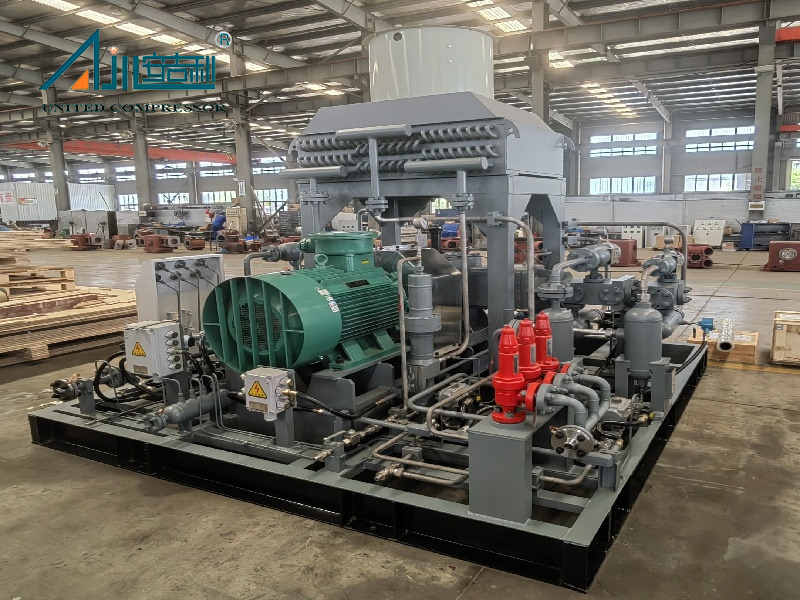
You must scrutinize technical specifications carefully. A robust Natural Gas Compressor relies on specific operational parameters. We break down the four most critical dimensions below.
Evaluate your local utility pipeline pressure first. This inlet pressure dictates your entire machine design. Low inlet pressure requires additional compression stages. Extra stages increase equipment footprint drastically. They also elevate manufacturing costs.
You must also define your standard discharge targets. Most stations aim for 3,600 to 4,500 psi. These high pressures dictate final vehicle tank capacity. Achieving these targets efficiently depends entirely on your baseline inlet metrics.
Flow rates determine how much fuel you can sell. You measure this in Standard Cubic Feet per Minute (SCFM). The industry also uses Gallons of Gas Equivalent (GGE). Never size your equipment based on daily average demand. Averages hide critical data.
Calculate your absolute peak hourly demand instead. Sizing for peak demand prevents massive dispensing failures. Drivers abandon stations during slow dispensing periods. Proper sizing protects your retail reputation.
You have two primary power options. Each presents unique benefits and infrastructure challenges.
Electric Motor: Electric drives offer minimal maintenance. They produce zero on-site emissions. They operate quietly in urban settings. However, they require robust infrastructure. You need a dedicated 480V 3-phase industrial power supply.
Gas Engine: Gas drives shine in remote locations. They utilize the pipeline gas directly for power. They avoid high peak-demand electrical charges from local utilities. Consider them if grid upgrades cost too much.
Assess oil carryover risks strictly. Lubricated cylinders introduce trace amounts of oil into the gas stream. This oil can contaminate vehicle fuel tanks. You must install aggressive coalescing filtration systems. You must drain these filters routinely.
Non-lubricated cylinders eliminate severe oil carryover. They reduce your filtration maintenance burden significantly. However, they rely on specialized Teflon wear rings. These rings possess shorter operational lifespans. You will replace wear components more frequently.
Your physical location often dictates hardware limits. Overlooking site constraints causes massive project delays. Evaluate your property thoroughly before signing purchase orders.
Electric units demand massive power draws upon startup. Upgrading a local grid transformer takes time. It can add six months to your timeline. It often adds six figures to your budget. Assess utility readiness immediately.
Common Mistake: Ordering a 200+ HP electric unit before securing utility approvals. Always verify grid capacity during your feasibility study.
Evaluate exact skid dimensions carefully. Urban retail stations face strict acoustic zoning laws. Municipalities often mandate noise levels below 75 dBA at property lines. Standard industrial equipment easily exceeds this limit.
You must invest in specialized noise attenuation enclosures. These custom canopies dampen mechanical vibrations. They block harsh acoustic frequencies effectively. Verify that enclosures allow proper internal ventilation.
Heavy machinery generates intense kinetic energy. You must manage this vibration safely. Verify local soil bearing capacity through geotechnical surveys. Weak soil cannot support industrial dynamic loads.
Follow concrete pad specifications perfectly. Engineers design foundations to absorb specific vibration frequencies. Incorrect pad thickness leads to catastrophic resonance. This resonance causes premature bearing and crankshaft failures.
Regional safety standards govern all installations. American facilities must strictly follow NFPA 52 guidelines. European operators adhere to ATEX directives. Ensure your chosen hardware meets these rigorous safety frameworks.
You must install reliable gas detection sensors. Route your emergency blowdown lines safely away from ignition sources. Implement automated Emergency Shutdown (ESD) systems. These mechanisms isolate gas flows instantly during hazardous events.
Purchase price represents a small fraction of financial reality. Energy bills and maintenance activities drive long-term profitability. You must project these expenses over a ten-year lifecycle.
Map out energy consumption per GGE accurately. Standard motors draw massive current during startup. They run at fixed speeds regardless of demand. This wastes significant electricity during off-peak hours.
High-efficiency Variable Frequency Drives (VFD) cost more upfront. However, they drastically lower monthly electrical bills. They modulate motor speed to match exact dispensing demand. This efficiency recovers the initial capital premium quickly.
Demand complete transparency regarding replacement intervals. Ask manufacturers for specific data on valve lifespans. Request realistic timelines for ring wear. Clarify recommended oil change frequencies.
Use maintenance data for shortlisting vendors. Disqualify manufacturers lacking local technician networks. A cheap machine becomes wildly expensive during prolonged downtime. Demand guaranteed Service Level Agreements (SLAs). Ensure replacement parts remain stocked regionally.
Modern operations shift away from reactive repairs. You should embrace predictive maintenance strategies. Look for units equipped with advanced Programmable Logic Controllers (PLCs).
These systems monitor critical metrics continuously. They track subtle vibration anomalies. They detect slight temperature spikes instantly. They monitor internal pressure fluctuations. Telemetry alerts operators before minor issues become catastrophic mechanical failures.
The transportation sector evolves rapidly. Commercial fleets are adopting diverse alternative fuels. You must plan for flexible site architecture. Single-fuel stations face future obsolescence risks.
Many operators transition toward hybrid LCNG stations. These facilities handle both liquefied and compressed gas. This transition requires capturing lost vapor efficiently.
Evaluate how a BOG Compressor integrates into your setup. Boil-Off Gas systems capture naturally expanding vapor from cryogenic storage. They compress this vapor back into usable fuel. This integration drastically reduces expensive fuel waste.
Plan your skid real estate thoughtfully. Leave physical space for future expansion modules. Design safety blast walls to accommodate varying fuel types safely.
You might eventually install a Hydrogen Compressor to serve modern transit buses. Hydrogen systems require entirely different metallurgy. Standard steel suffers embrittlement risks under hydrogen exposure. Similarly, regional fleet demands might justify adding an LPG Compressor for autogas dispensing. Anticipating these additions prevents massive site redesigns later.
Buying high-pressure dispensing equipment represents an infrastructure marriage. It is never a simple transactional purchase. Your choice dictates operational efficiency for decades. You must balance initial capital against long-term operational reality.
Take immediate action on these critical next steps:
Audit your exact utility pipeline pressure meticulously.
Verify local electrical grid capacity before releasing any Request for Proposal (RFP).
Request comprehensive operational expense models over a 5-to-10-year period.
Avoid making decisions based solely on raw equipment quotes.
Design your site layout to accommodate future alternative fuel expansions.
A: Commercial units are continuous-duty, multi-stage industrial machines. They deliver massive flow rates for rapid vehicle refueling. Home units, known as Vehicle Refueling Appliances (VRA), are low-flow solutions. They fuel single vehicles slowly overnight. VRA systems lack industrial durability. They remain completely unsuitable for retail applications or commercial fleet environments.
A: A high-quality unit typically lasts 15 to 20 years. However, you must follow strict preventive maintenance schedules. This longevity requires completing major mechanical overhauls precisely. Operators usually perform these complete overhauls every 30,000 to 40,000 running hours. Neglecting these maintenance intervals sharply reduces equipment lifespan.
A: Yes, you can manage variable pressures. However, it requires specific engineering interventions. You must install Variable Frequency Drives to modulate motor speeds safely. You might also need inlet buffer tanks. These systems prevent internal starvation or mechanical overloading. You should always size your equipment based on the minimum guaranteed pipeline pressure.


