| Availability: | |
|---|---|
| Quantity: | |
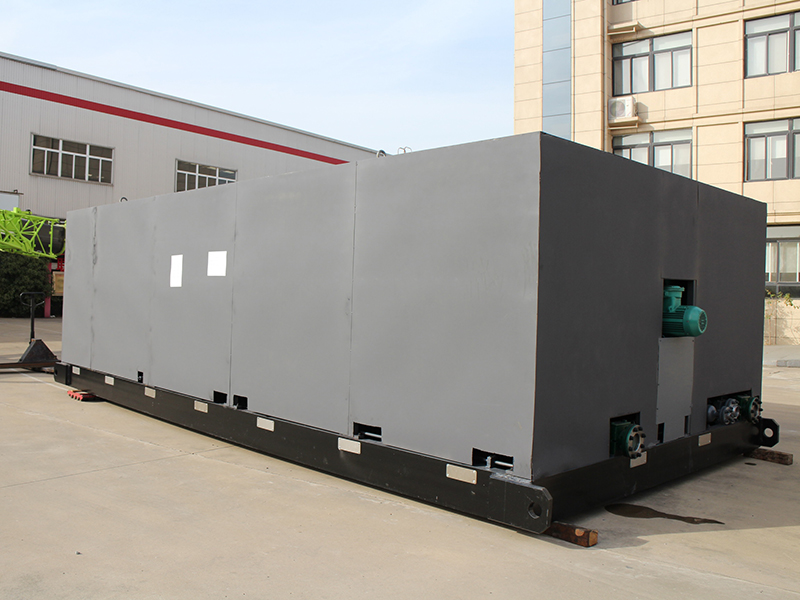
The DW-17.9/(4-5)-6.5 Hydrogen Compressor, a specialized reciprocating piston compressor, is engineered for the circulating hydrogen compression needs of an iron ore direct reduction demonstration project. It serves as a core device in the project’s gas supply system, which uses green hydrogen as the reducing gas to produce direct reduced iron with a metallization rate of no less than 92%. This compressor is tailored for outdoor industrial environments, excelling in stable operation, strict hydrogen tightness, and adaptability to specific process conditions, making it ideal for the high-demand scenarios of green ironmaking and hydrogen circulation systems.
Key technical parameters define its performance: it processes a mixed medium of 95~100% hydrogen and 0~5% nitrogen, with a nominal volumetric flow rate of 17.9m³/min (equivalent to 1074Nm³/h, scalable to 3000~5000Nm³/h for process needs). It operates at an inlet pressure of 500~600kPa.A (inlet temperature 5~20℃, saturated with water) and achieves an exhaust pressure of 750kPa.A, with a terminal gas supply temperature ≤40℃. Powered by a 132kW explosion-proof variable-frequency motor (model YBBP-355M-8), it has an overall dimension of approximately 3500×3000×2300mm and a total weight of about 8T, ensuring seamless integration into the project’s outdoor skid-mounted installation setup.
Beyond its standalone functionality, the DW-17.9/(4-5)-6.5 is designed with a comprehensive supporting system, including a water-cooled cooler, gas-water separator, PLC control system, and oil-free lubrication components—all constructed with hydrogen-compatible materials (e.g., 316SS for wetted parts). This integrated design aligns with the project’s requirements for explosion protection (ExdIICT4), remote monitoring, and long-term continuous operation (8000 hours annually), ensuring compatibility with the entire iron ore direct reduction process chain.
The DW-17.9/(4-5)-6.5 Hydrogen Compressor delivers exceptional stability and durability, thanks to its D-type (symmetrical balanced) two-cylinder structure and double-middle-body design. This structure minimizes vibration (vibration intensity ≤18mm/s, complying with GB/T7777-2021) and prevents crankcase oil from contaminating the hydrogen medium. Key components—such as the 45# steel crankshaft (treated with induction hardening for enhanced wear resistance) and the 42CrMo piston rod (nitrided surface, minimum hardness HRC60)—boast a design lifespan of ≥30,000 hours, reducing maintenance frequency and downtime during long-term industrial operation.
A critical advantage is its rigorous hydrogen tightness design, essential for preventing leakage of the flammable hydrogen medium. The compressor adopts a multi-stage sealing system: filled PTFE packing rings (with nitrogen purging ports) for the piston rod, and mesh-structured valves with PEEK valve plates (leakage rate ≤3‰, with zero on-site leakage). Additionally, the entire electrical system (including the control cabinet with positive pressure explosion protection) meets ExdIICT4 explosion-proof standards, and safety devices such as pressure relief valves and gas-water separators are installed to ensure safe operation in outdoor explosive environments.
The compressor is equipped with a Siemens Smart200 PLC and a 7-inch Weinview color touchscreen, enabling frequency conversion start-up (to reduce grid impact) and real-time monitoring of key parameters (e.g., inlet/outlet pressure, oil/water temperature). It reserves an RS485 communication interface and supports MODBUS-RTU/Ethernet protocols for seamless connection to the user’s DCS system. This allows for unmanned operation, remote display of operating/alarm information, and remote shutdown, aligning with the project’s need for integrated process control and reducing on-site operation workload.
Application Area
Hydrogen compressors play a crucial role in hydrogen power generation, energy storage, and heating. For example, compressing hydrogen gas to high pressure for fuel cell power generation, or storing it in high-pressure gas cylinders or underground storage tanks for emergency use. In addition, hydrogen heating systems also rely on their high-pressure delivery capacity. Hydrogen fuel cell vehicles rely on a hydrogen compressor to compress the hydrogen gas in the storage tank to the required pressure of the fuel cell, which is the core component of vehicle operation. Lightweight design and efficient compression technology are the focus of this field.
Highlight Advantages
![]() | ![]() | ![]() | ![]() |
| Has high efficiency, strong reliability, and high degree of automation; | Less vulnerable parts, low vibration, low noise, and easy operation and maintenance | The main and auxiliary equipment of the compressor are all installed on the sled, running smoothly and reliably. The overall sled installation is convenient for the transportation and installation of the compressor | The entire machine components are carefully designed |
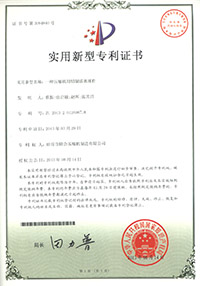
Patent Certificates
![]() | A piston rod thread protective sleeve ZL 2017 2 1907021.7 | ![]() | A piston ring support device ZL 2018 2 0294776.2 | |
![]() | A range piston ZL 2017 2 190177.0 for symmetrical balanced compressors | ![]() | Integrated long short double compartment ZL 2018 2 0294762.0 |
Whole Machine Description
![]() | ![]() |
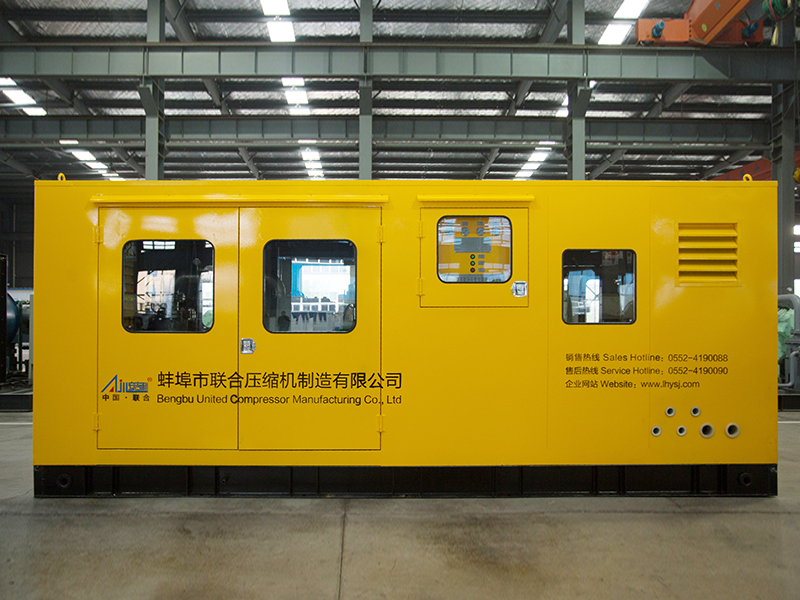
The compressor in this picture is a non-standard product. The product provides independent solutions tailored to customers' specific usage requirements (flow rate/purity/pressure, usage environment, main purpose, and customer specific requirements), from design to product customization.
Structural form: D-type/M-type/S-type/W-type/V-type/Z-type
Cooling method: water cooling/air cooling/mixed cooling
Installation form: fixed/mobile/pry mounted/cabin type
Drive mode: motor drive/diesel engine start
Transportation: sea/air/land
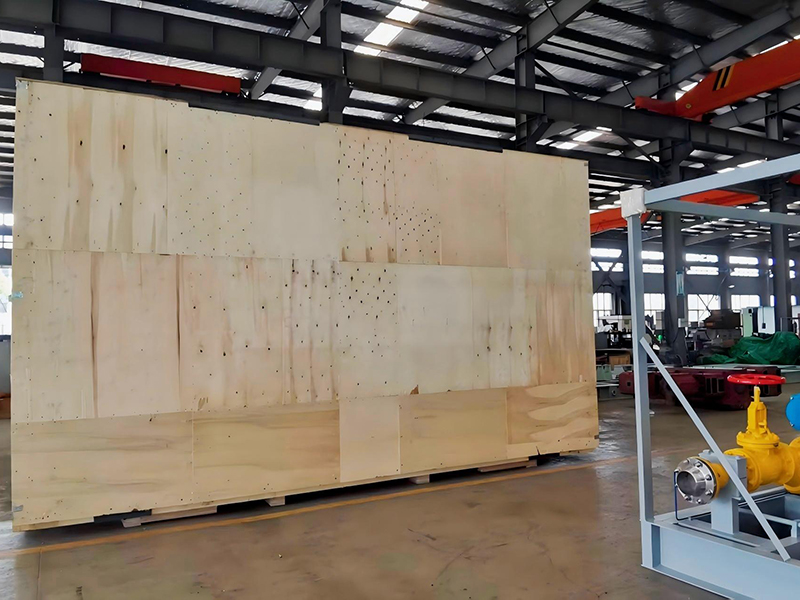
Packaging:
![]() | ![]() | ![]() |
| Metal cabin | Wooden box | Soundproof cabin |
Technical Parameter
| No. | Model | Medium | Flow rate (Nm3/h) | Exhaust pressure (MPa.G) | Motor power (kW) | Cooling method | Overall dimensions (mm) | Weights (kg) | |
| 1 | DW-1.6/(8~12)-120 | Hydrogen | 800 | 12 | 160 | Water-cooled | 5800×3000×2300 | 8500 | |
| 2 | DW-1.8/15-30 | Hydrogen | 1500 | 3.0 | 75 | Water-cooled | 3200×3000×1850 | 5800 | |
| 3 | DW-6.74(3.3)/0.7(5~12)-12 | Hydrogen | 600 | 1.2 | 90 | Water-cooled | 5000×3200×2100 | 8000 | |
| 4 | DW-17.9/(4~5)-6.5 | Hydrogen | 1270 | 0.65 | 132 | Water-cooled | 3500×3000×2300 | 8000 | |
| 5 | DW-1.8/15-30 | Hydrogen | 1500 | 3.0 | 75 | Water-cooled | 3200×3000×1850 | 5800 | |
| 6 | DW-9.55/0.03-16 | Hydrogen | 515 | 1.6 | 90 | Water-cooled | 3500×3200×2500 | 6500 | |
| 7 | DW-96.5/( 15~23 )-( 21~ 29 ) | Hydrogen | 4500 | 2. 1~2.9 | 185 | Water-cooled | 5000×3000×2500 | 12000 | |
| 8 | DW-48/( 15~23 )-( 21~ 29 ) | Hydrogen | 2642~4500 | 2. 1~2.9 | 55 | Water-cooled | 4000×2700×2300 | 6000 | |
| 9 | D-0.57/16-200 | Hydrogen | 500 | 20 | 75 | Water-cooled | 5800×3200×2350 | 9000 | |
| 10 | ZW-0. 18/15-22 | Hydrogen | 150 | 2.2 | 11 | Water-cooled | 2200×1600×1700 | 2000 | |
| 11 | ZW-0.82/(6~8)-20 | Hydrogen | 300 | 2.0 | 22 | Water-cooled | 2500×1500×1750 | 2000 | |
| 12 | W-3/0.1-150 | Hydrogen | 212 | 15 | 55 | Water-cooled | 6000×2700×2100 | 15000 | |
| 13 | MW-7.7/9.8-40 | Hydrogen | 4200 | 4.0 | 355 | Water-cooled | 7500×3600×2000 | 22000 | |
| 14 | MW-25.2/(1.5~1.7)-10 | Hydrogen | 3300 | 1.0 | 315 | Water-cooled | 8000×3000×2200 | 20000 | |
| 15 | PW-0.6/(10~15)-30 | Hydrogen | 0~560 | 3.0 | 30 | Mixed cooling | 2200×1800×1600 | 1800 | |
| 16 | PW-13.7/17-25 | Hydrogen | 820 | 2.5 | 30 | Mixed cooling | 4000×2700×2300 | 6000 | |
| 17 | D-0.26/(28~31)-150 | Hydrogen | 400 | 15 | 45 | Mixed cooling | 3800×3200×1950 | 4800 | |
| 18 | PW-13.7/17-25 | Hydrogen | 820 | 2.5 | 30 | Mixed cooling | 4000×2700×2300 | 6000 | |
| 19 | VW-14.3/7 | Hydrogen | 750 | 0.7 | 110 | Mixed cooling | 4800×2250×2100 | 8000 | |
| 20 | DW-7.6/(4~5.7)-6.5 | Hydrogen | 2000 | 0.65 | 55 | Mixed cooling | 3500×3000×2300 | 6000 | |
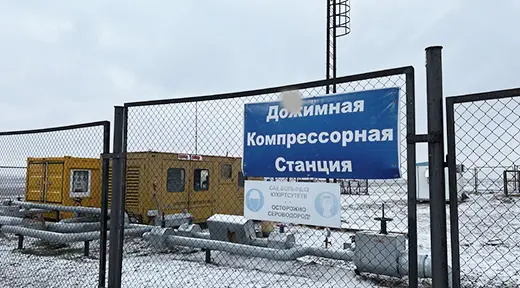
Project Case
![]() | ![]() | ![]() |
| Alibek oilfield in Southern Kazakhstan | Zaozhuang CNG compressor project of Chengdu Shenliang Technology Co., Ltd. | Beijing Hongke Qingneng Technology Co., Ltd. associated gas compressor for Shanxi Yan'an 60000 m3 project |
It is ideal for hydrogen power generation, energy storage (high-pressure tank storage), fuel cell vehicle hydrogen supply systems, and industrial hydrogen heating. Its oil-free design makes it particularly suitable for scenarios requiring high-purity hydrogen, such as semiconductor manufacturing and green hydrogen projects.
Yes. Bengbu United Compressor offers tailored solutions based on customer requirements, including flow rate, pressure, purity, and operating environment. Customizations include cooling methods (water-cooled, air-cooled, mixed cooling), drive modes (motor or diesel engine), and packaging (metal cabin, wooden box, soundproof cabin).
Thanks to its low number of vulnerable parts and robust design, maintenance intervals are extended. Routine checks (e.g., oil level, temperature) are recommended monthly, with major overhauls typically needed every 12–18 months, depending on usage intensity.
The DW-17.9/(4-5)-6.5 Hydrogen Compressor, a specialized reciprocating piston compressor, is engineered for the circulating hydrogen compression needs of an iron ore direct reduction demonstration project. It serves as a core device in the project’s gas supply system, which uses green hydrogen as the reducing gas to produce direct reduced iron with a metallization rate of no less than 92%. This compressor is tailored for outdoor industrial environments, excelling in stable operation, strict hydrogen tightness, and adaptability to specific process conditions, making it ideal for the high-demand scenarios of green ironmaking and hydrogen circulation systems.
Key technical parameters define its performance: it processes a mixed medium of 95~100% hydrogen and 0~5% nitrogen, with a nominal volumetric flow rate of 17.9m³/min (equivalent to 1074Nm³/h, scalable to 3000~5000Nm³/h for process needs). It operates at an inlet pressure of 500~600kPa.A (inlet temperature 5~20℃, saturated with water) and achieves an exhaust pressure of 750kPa.A, with a terminal gas supply temperature ≤40℃. Powered by a 132kW explosion-proof variable-frequency motor (model YBBP-355M-8), it has an overall dimension of approximately 3500×3000×2300mm and a total weight of about 8T, ensuring seamless integration into the project’s outdoor skid-mounted installation setup.
Beyond its standalone functionality, the DW-17.9/(4-5)-6.5 is designed with a comprehensive supporting system, including a water-cooled cooler, gas-water separator, PLC control system, and oil-free lubrication components—all constructed with hydrogen-compatible materials (e.g., 316SS for wetted parts). This integrated design aligns with the project’s requirements for explosion protection (ExdIICT4), remote monitoring, and long-term continuous operation (8000 hours annually), ensuring compatibility with the entire iron ore direct reduction process chain.
The DW-17.9/(4-5)-6.5 Hydrogen Compressor delivers exceptional stability and durability, thanks to its D-type (symmetrical balanced) two-cylinder structure and double-middle-body design. This structure minimizes vibration (vibration intensity ≤18mm/s, complying with GB/T7777-2021) and prevents crankcase oil from contaminating the hydrogen medium. Key components—such as the 45# steel crankshaft (treated with induction hardening for enhanced wear resistance) and the 42CrMo piston rod (nitrided surface, minimum hardness HRC60)—boast a design lifespan of ≥30,000 hours, reducing maintenance frequency and downtime during long-term industrial operation.
A critical advantage is its rigorous hydrogen tightness design, essential for preventing leakage of the flammable hydrogen medium. The compressor adopts a multi-stage sealing system: filled PTFE packing rings (with nitrogen purging ports) for the piston rod, and mesh-structured valves with PEEK valve plates (leakage rate ≤3‰, with zero on-site leakage). Additionally, the entire electrical system (including the control cabinet with positive pressure explosion protection) meets ExdIICT4 explosion-proof standards, and safety devices such as pressure relief valves and gas-water separators are installed to ensure safe operation in outdoor explosive environments.
The compressor is equipped with a Siemens Smart200 PLC and a 7-inch Weinview color touchscreen, enabling frequency conversion start-up (to reduce grid impact) and real-time monitoring of key parameters (e.g., inlet/outlet pressure, oil/water temperature). It reserves an RS485 communication interface and supports MODBUS-RTU/Ethernet protocols for seamless connection to the user’s DCS system. This allows for unmanned operation, remote display of operating/alarm information, and remote shutdown, aligning with the project’s need for integrated process control and reducing on-site operation workload.
Application Area
Hydrogen compressors play a crucial role in hydrogen power generation, energy storage, and heating. For example, compressing hydrogen gas to high pressure for fuel cell power generation, or storing it in high-pressure gas cylinders or underground storage tanks for emergency use. In addition, hydrogen heating systems also rely on their high-pressure delivery capacity. Hydrogen fuel cell vehicles rely on a hydrogen compressor to compress the hydrogen gas in the storage tank to the required pressure of the fuel cell, which is the core component of vehicle operation. Lightweight design and efficient compression technology are the focus of this field.
Highlight Advantages
![]() | ![]() | ![]() | ![]() |
| Has high efficiency, strong reliability, and high degree of automation; | Less vulnerable parts, low vibration, low noise, and easy operation and maintenance | The main and auxiliary equipment of the compressor are all installed on the sled, running smoothly and reliably. The overall sled installation is convenient for the transportation and installation of the compressor | The entire machine components are carefully designed |
Patent Certificates
![]() | A piston rod thread protective sleeve ZL 2017 2 1907021.7 | ![]() | A piston ring support device ZL 2018 2 0294776.2 | |
![]() | A range piston ZL 2017 2 190177.0 for symmetrical balanced compressors | ![]() | Integrated long short double compartment ZL 2018 2 0294762.0 |
Whole Machine Description
![]() | ![]() |
The compressor in this picture is a non-standard product. The product provides independent solutions tailored to customers' specific usage requirements (flow rate/purity/pressure, usage environment, main purpose, and customer specific requirements), from design to product customization.
Structural form: D-type/M-type/S-type/W-type/V-type/Z-type
Cooling method: water cooling/air cooling/mixed cooling
Installation form: fixed/mobile/pry mounted/cabin type
Drive mode: motor drive/diesel engine start
Transportation: sea/air/land
Packaging:
![]() | ![]() | ![]() |
| Metal cabin | Wooden box | Soundproof cabin |
Technical Parameter
| No. | Model | Medium | Flow rate (Nm3/h) | Exhaust pressure (MPa.G) | Motor power (kW) | Cooling method | Overall dimensions (mm) | Weights (kg) | |
| 1 | DW-1.6/(8~12)-120 | Hydrogen | 800 | 12 | 160 | Water-cooled | 5800×3000×2300 | 8500 | |
| 2 | DW-1.8/15-30 | Hydrogen | 1500 | 3.0 | 75 | Water-cooled | 3200×3000×1850 | 5800 | |
| 3 | DW-6.74(3.3)/0.7(5~12)-12 | Hydrogen | 600 | 1.2 | 90 | Water-cooled | 5000×3200×2100 | 8000 | |
| 4 | DW-17.9/(4~5)-6.5 | Hydrogen | 1270 | 0.65 | 132 | Water-cooled | 3500×3000×2300 | 8000 | |
| 5 | DW-1.8/15-30 | Hydrogen | 1500 | 3.0 | 75 | Water-cooled | 3200×3000×1850 | 5800 | |
| 6 | DW-9.55/0.03-16 | Hydrogen | 515 | 1.6 | 90 | Water-cooled | 3500×3200×2500 | 6500 | |
| 7 | DW-96.5/( 15~23 )-( 21~ 29 ) | Hydrogen | 4500 | 2. 1~2.9 | 185 | Water-cooled | 5000×3000×2500 | 12000 | |
| 8 | DW-48/( 15~23 )-( 21~ 29 ) | Hydrogen | 2642~4500 | 2. 1~2.9 | 55 | Water-cooled | 4000×2700×2300 | 6000 | |
| 9 | D-0.57/16-200 | Hydrogen | 500 | 20 | 75 | Water-cooled | 5800×3200×2350 | 9000 | |
| 10 | ZW-0. 18/15-22 | Hydrogen | 150 | 2.2 | 11 | Water-cooled | 2200×1600×1700 | 2000 | |
| 11 | ZW-0.82/(6~8)-20 | Hydrogen | 300 | 2.0 | 22 | Water-cooled | 2500×1500×1750 | 2000 | |
| 12 | W-3/0.1-150 | Hydrogen | 212 | 15 | 55 | Water-cooled | 6000×2700×2100 | 15000 | |
| 13 | MW-7.7/9.8-40 | Hydrogen | 4200 | 4.0 | 355 | Water-cooled | 7500×3600×2000 | 22000 | |
| 14 | MW-25.2/(1.5~1.7)-10 | Hydrogen | 3300 | 1.0 | 315 | Water-cooled | 8000×3000×2200 | 20000 | |
| 15 | PW-0.6/(10~15)-30 | Hydrogen | 0~560 | 3.0 | 30 | Mixed cooling | 2200×1800×1600 | 1800 | |
| 16 | PW-13.7/17-25 | Hydrogen | 820 | 2.5 | 30 | Mixed cooling | 4000×2700×2300 | 6000 | |
| 17 | D-0.26/(28~31)-150 | Hydrogen | 400 | 15 | 45 | Mixed cooling | 3800×3200×1950 | 4800 | |
| 18 | PW-13.7/17-25 | Hydrogen | 820 | 2.5 | 30 | Mixed cooling | 4000×2700×2300 | 6000 | |
| 19 | VW-14.3/7 | Hydrogen | 750 | 0.7 | 110 | Mixed cooling | 4800×2250×2100 | 8000 | |
| 20 | DW-7.6/(4~5.7)-6.5 | Hydrogen | 2000 | 0.65 | 55 | Mixed cooling | 3500×3000×2300 | 6000 | |
Project Case
![]() | ![]() | ![]() |
| Alibek oilfield in Southern Kazakhstan | Zaozhuang CNG compressor project of Chengdu Shenliang Technology Co., Ltd. | Beijing Hongke Qingneng Technology Co., Ltd. associated gas compressor for Shanxi Yan'an 60000 m3 project |
It is ideal for hydrogen power generation, energy storage (high-pressure tank storage), fuel cell vehicle hydrogen supply systems, and industrial hydrogen heating. Its oil-free design makes it particularly suitable for scenarios requiring high-purity hydrogen, such as semiconductor manufacturing and green hydrogen projects.
Yes. Bengbu United Compressor offers tailored solutions based on customer requirements, including flow rate, pressure, purity, and operating environment. Customizations include cooling methods (water-cooled, air-cooled, mixed cooling), drive modes (motor or diesel engine), and packaging (metal cabin, wooden box, soundproof cabin).
Thanks to its low number of vulnerable parts and robust design, maintenance intervals are extended. Routine checks (e.g., oil level, temperature) are recommended monthly, with major overhauls typically needed every 12–18 months, depending on usage intensity.