


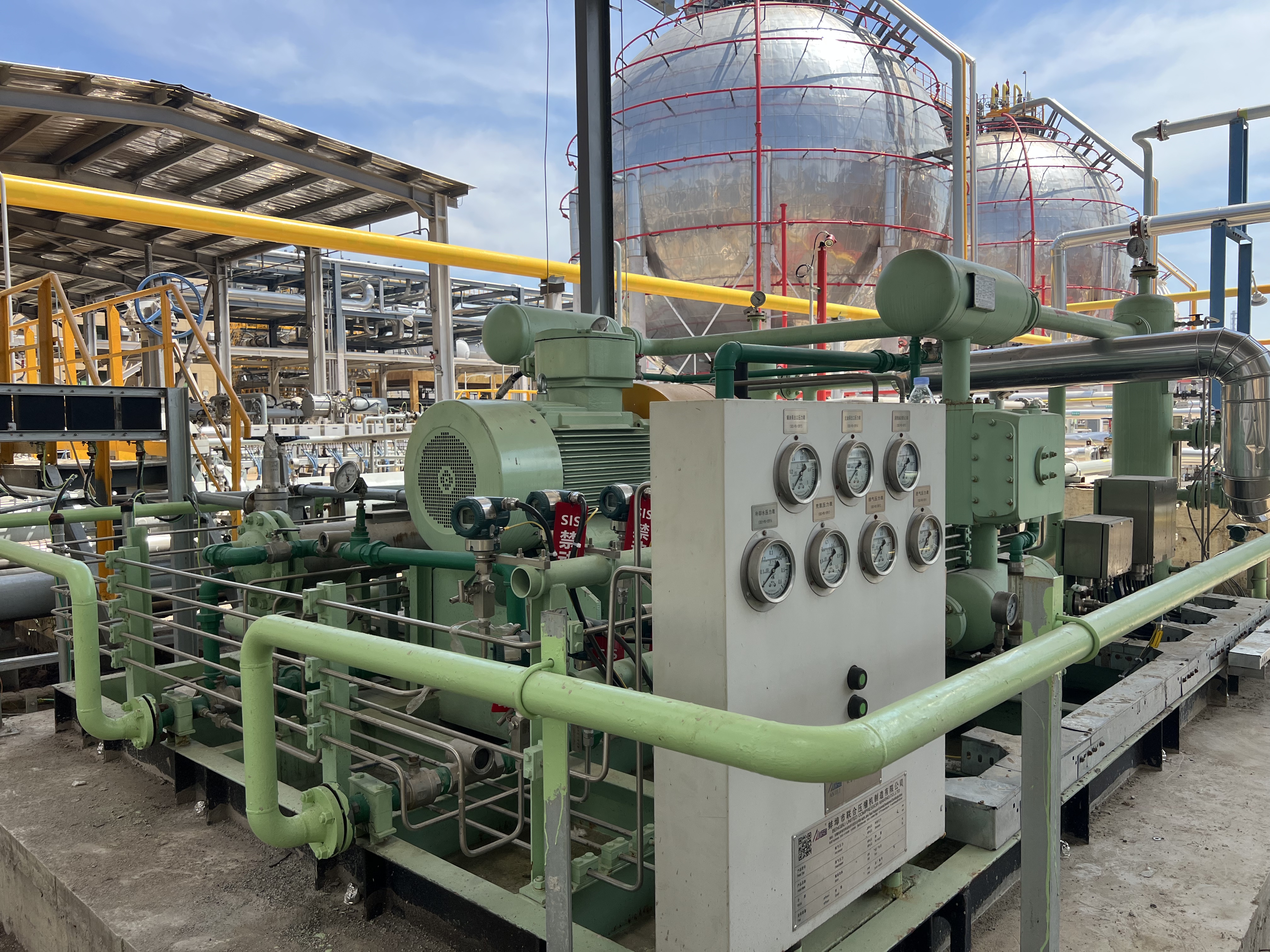
In the liquefied petroleum gas (LPG) sector, gas compressors are essential for the safe and efficient handling of propane, butane, and mixed gases. In LPG filling plants, they transfer liquid or vapor between storage tanks, recover residual gas from cylinders, and boost pressure for filling operations. These processes not only improve operational efficiency but also reduce gas losses, improving overall plant safety and profitability.
In the chemical industry, industrial gas compressors are widely used for feeding and circulating gases in reactors, separation units, and synthesis systems. Propane compressors handle process gases under controlled pressure and temperature conditions, such as in ammonia or methanol production. Their robust design allows them to handle corrosive, flammable, or toxic gases safely, often incorporating explosion-proof motors and corrosion-resistant materials.

Modern gas compressors are designed for high efficiency, low maintenance, and maximum safety. Oil-free designs, leak-proof sealing systems, and variable-speed drives help optimize energy consumption while meeting environmental standards. Many manufacturers also offer customized compressor solutions to match specific gas types, pressures, and operational environments, ensuring reliability in industries from petrochemical plants to specialty gas suppliers.

