


| Quantity: | |
|---|---|


The DW-3.8/(4~6)-14 Nitrogen Compressor is a high-reliability reciprocating piston compressor engineered specifically for efficient nitrogen compression. It is ideally suited for a wide range of industrial scenarios, including chemical fertilizer production nitrogen boosting, petrochemical process nitrogen protection, industrial nitrogen storage systems, and high-demand gas supply operations. This compressor maintains stable performance even under fluctuating working conditions, delivering consistent and reliable nitrogen compression solutions.
Core technical parameters underscore its operational capabilities: it takes nitrogen as the compression medium, with a rated treatment capacity of 1200 Nm³/h and a nominal volumetric flow rate of 3.8 m³/min. The inlet pressure ranges from 0.4 to 0.6 MPa.G (with an inlet design pressure of 0.5 MPa.G) and the inlet temperature is ambient, while the exhaust pressure reaches 1.4 MPa.G and the exhaust temperature is controlled at ≤135 ℃ (with a terminal gas supply temperature of ≤50 ℃ after cooling). Driven by a 75 kW main motor (model: YBX4-315M-8, second-level energy efficiency), the compressor has an overall dimension of approximately 4800×3200×1800 mm and a total weight of around 5 T. Its fixed, skid-mounted design (with a dedicated foundation) facilitates straightforward on-site installation and seamless integration into existing industrial layouts.
As a specialized nitrogen compression equipment, this model is optimized for the 1200 Nm³/h flow range and 1.4 MPa.G exhaust pressure. However, its fundamental design framework can be customized to accommodate varying flow rates and pressure requirements, making it adaptable to diverse industrial needs—from pharmaceutical industry nitrogen inerting to food processing nitrogen preservation projects.
The DW-3.8/(4~6)-14 Nitrogen Compressor excels in stability and durability, backed by a refined structural design. It adopts a D-type (symmetrical balanced) structure with two rows and single-stage compression, which effectively minimizes mechanical vibration (in line with the GB/T7777-2021 standard) and reduces noise (meeting the GB/T4980-2003 specification). A water-cooling system is integrated to cool the cylinders, packing, and compressed nitrogen, ensuring steady operation during long-term continuous service. Key components are constructed with high-quality materials: the crankshaft is made of 45# steel (with induction-hardened crankpins for enhanced wear resistance), and the piston rod is crafted from 42CrMo (with a nitrided surface achieving a minimum hardness of HRC60). These premium components significantly prolong the equipment's service life, reducing maintenance frequency and operational costs.
A standout feature of this compressor is its zone-specific oil-free lubrication design, which is vital for preserving nitrogen purity. It incorporates a double-middle-body structure, where the middle-body space is greater than one stroke—this design creates a reliable barrier to prevent lubricating oil from the crankcase from entering the cylinders and contaminating the nitrogen medium. The cylinders (made of QT600-3 ductile iron) and packing (special polytetrafluoroethylene-filled materials) adopt an oil-free configuration, eliminating the need for oil injection lubrication in these critical areas. Meanwhile, mechanical components such as the crankshaft, connecting rod, and crosshead use pressure lubrication to ensure smooth operation. This dual lubrication strategy guarantees that the compressed nitrogen meets strict purity standards, making the compressor suitable for applications like electronic manufacturing where nitrogen contamination is strictly forbidden.
The compressor is equipped with a mature control system to enable safe and efficient operation. While the unit's start-up control cabinet is provided by the user, the manufacturer integrates all compressor operation and alarm signal lines into an on-site explosion-proof junction box, and supplies interlock logic diagrams/logic explanations as well as terminal wiring diagrams for the junction box. This setup supports seamless connection to the user's control system, facilitating centralized monitoring and management. In terms of safety protection, the compressor offers all-round safeguards: it conducts real-time monitoring of key parameters including lubricating oil pressure, cooling water pressure, inlet/exhaust pressure, exhaust temperature, and main motor bearing/winding temperature. Corresponding alarm or shutdown protection is triggered when parameters exceed safe limits, ensuring the compressor operates in a secure and reliable manner at all times.
Application Area
Nitrogen compressors are indispensable equipment in the industrial gas supply chain. With its 1.4 MPa.G exhaust pressure, 1200 Nm³/h treatment capacity, and zone-specific oil-free lubrication design, the DW-3.8/(4~6)-14 Nitrogen Compressor plays a critical role in multiple industrial scenarios. In chemical fertilizer production, it compresses low-pressure nitrogen (0.4~0.6 MPa.G) to 1.4 MPa.G, providing the required pressure for nitrogen-based fertilizer synthesis processes. In petrochemical plants, it is used for nitrogen purging and pressure testing of pipelines and equipment, leveraging its stable output to ensure safe maintenance and commissioning operations. In the metal processing industry, it supplies high-pressure nitrogen for metal heat treatment, creating an inert atmosphere to prevent oxidation of workpieces. Additionally, its compliance with strict explosion-proof standards (main motor explosion-proof grade: ExdIICT4) and IP55 protection grade makes it suitable for hazardous industrial environments where safe nitrogen handling is a priority.
Highlight Advantages
 |  |  |  |
| Has high efficiency, strong reliability, and high degree of automation; | Less vulnerable parts, low vibration, low noise, and easy operation and maintenance | The main and auxiliary equipment of the compressor are all installed on the sled, running smoothly and reliably. The overall sled installation is convenient for the transportation and installation of the compressor | The entire machine components are carefully designed |
Patent Certificates
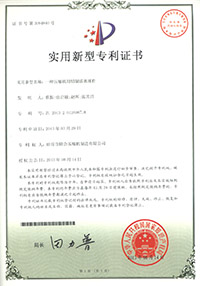 | A piston rod thread protective sleeve ZL 2017 2 1907021.7 | | A piston ring support device ZL 2018 2 0294776.2 | |
| A range piston ZL 2017 2 190177.0 for symmetrical balanced compressors | | Integrated long short double compartment ZL 2018 2 0294762.0 |
Whole Machine Description
The compressor features a double-middle-body structure, and the internal space of the middle body is designed to be larger than one stroke of the piston. This structural arrangement forms an effective barrier that prevents lubricating oil from the crankcase from migrating into the cylinders, thereby avoiding oil contamination of the nitrogen medium and ensuring the purity of the compressed nitrogen. The compressor cylinder is made of ductile iron (QT600-3), a material with high strength, good wear resistance, and excellent heat dissipation performance—well-suited to withstand the pressure and temperature changes during nitrogen compression. The cylinder adopts a radial arrangement and is equipped with dedicated intake and exhaust buffers, which help stabilize the gas flow during the intake and exhaust processes, reduce pressure fluctuations, and lower operational noise.
The compressor packing is installed from the working chamber side of the cylinder. The first small chamber adjacent to the cylinder working chamber is fitted with a flow restrictor ring, which plays a throttling role to reduce gas leakage. Several subsequent small chambers are each equipped with two sets of packing rings, made of special polytetrafluoroethylene-filled material. This material exhibits outstanding self-lubricating properties, wear resistance, and thermal conductivity, eliminating the need for oil injection lubrication in the packing area and further ensuring the oil-free condition of the compressed nitrogen. The compressor gas valves adopt an internationally popular mesh structure design, which offers large flow passages, low flow resistance, and fast opening/closing responses—effectively improving the compression efficiency and reducing energy consumption.
The compressor piston is made of either ZL108 aluminum alloy or HT250 gray cast iron, both of which are lightweight and high-strength materials that reduce the inertial force during piston movement. The piston is equipped with piston rings and guide rings, which ensure effective sealing between the piston and the cylinder wall, as well as stable guiding of the piston's reciprocating motion. The piston rod is made of 42CrMo alloy steel, with its surface subjected to nitriding treatment to achieve a minimum hardness of HRC60—greatly enhancing its wear resistance and corrosion resistance. The threads on the piston rod are manufactured using a rolling process, which improves thread strength and fatigue resistance. The piston rod is connected to the crosshead via threads, ensuring a secure and reliable connection that can withstand the alternating forces during operation.
The compressor crosshead is made of ductile iron (QT600-3), which combines high strength and good toughness. The crosshead is machined with threads for connecting the piston rod and a mounting hole for the crosshead pin (used to connect the connecting rod). Its simple and robust structure ensures reliable transmission of motion between the connecting rod and the piston rod, with minimal maintenance requirements. The main bearings of the compressor, as well as the sliding surfaces of the crosshead and the bearings of the connecting rod (both large and small ends), adopt pressure lubrication. This lubrication method delivers a continuous supply of pressurized lubricating oil to the friction surfaces, forming a stable oil film that reduces wear and dissipates heat—ensuring long-term reliable operation of the moving components.
| |
The compressor in this picture is a non-standard product. The product provides independent solutions tailored to customers' specific usage requirements (flow rate/purity/pressure, usage environment, main purpose, and customer specific requirements), from design to product customization.
Structural form: D-type/M-type/S-type/W-type/V-type/Z-type
Cooling method: water cooling/air cooling/mixed cooling
Installation form: fixed/mobile/pry mounted/cabin type
Drive mode: motor drive/diesel engine start
Transportation: sea/air/land
Packaging:
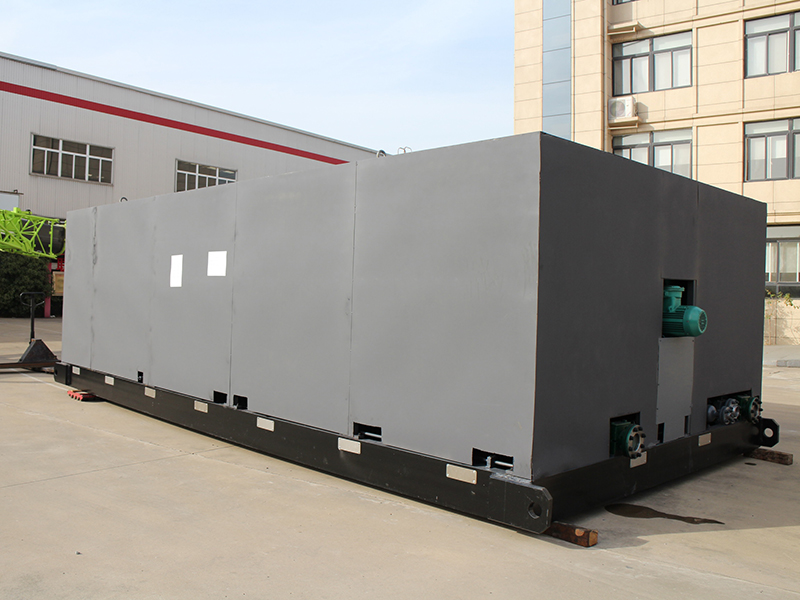 | 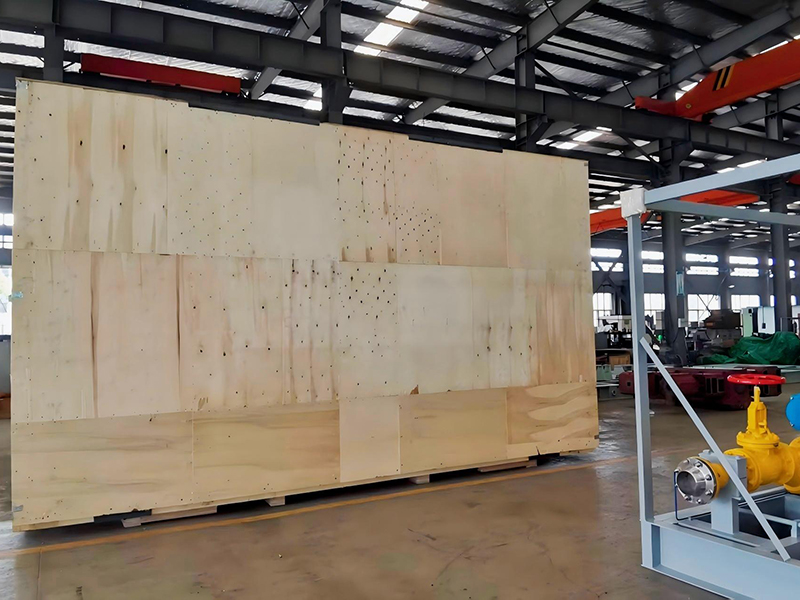 | 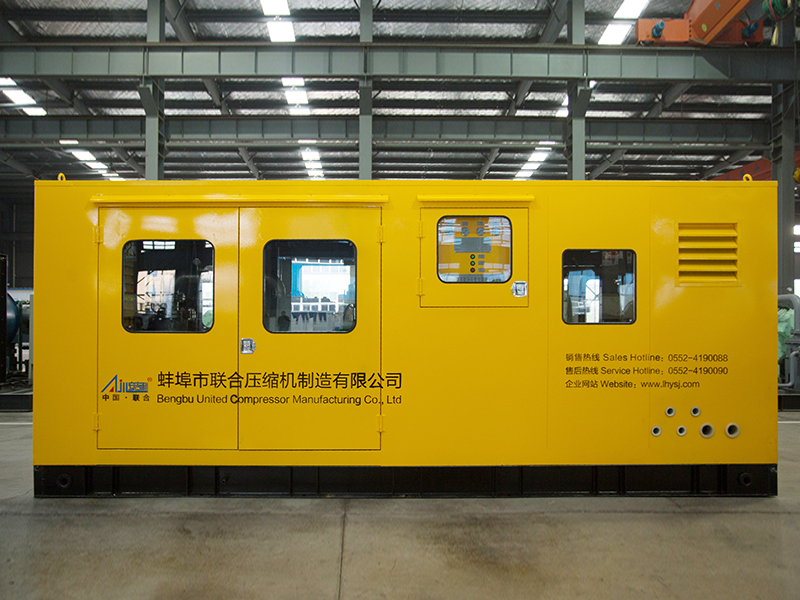 |
| Metal cabin | Wooden box | Soundproof cabin |
Technical Parameter
| No. | Model | Medium | Flow rate (Nm3/h) | Exhaust pressure (MPa.G) | Motor power (kW) | Cooling method | Overall dimensions (mm) | Weights (kg) | |
| 1 | DW-1.6/(8~12)-120 | Hydrogen | 800 | 12 | 160 | Water-cooled | 5800×3000×2300 | 8500 | |
| 2 | DW-1.8/15-30 | Hydrogen | 1500 | 3.0 | 75 | Water-cooled | 3200×3000×1850 | 5800 | |
| 3 | DW-6.74(3.3)/0.7(5~12)-12 | Hydrogen | 600 | 1.2 | 90 | Water-cooled | 5000×3200×2100 | 8000 | |
| 4 | DW-17.9/(4~5)-6.5 | Hydrogen | 1270 | 0.65 | 132 | Water-cooled | 3500×3000×2300 | 8000 | |
| 5 | DW-1.8/15-30 | Hydrogen | 1500 | 3.0 | 75 | Water-cooled | 3200×3000×1850 | 5800 | |
| 6 | DW-9.55/0.03-16 | Hydrogen | 515 | 1.6 | 90 | Water-cooled | 3500×3200×2500 | 6500 | |
| 7 | DW-96.5/( 15~23 )-( 21~ 29 ) 29 ) | Hydrogen | 4500 | 2. 1~2.9 | 185 | Water-cooled | 5000×3000×2500 | 12000 | |
| 8 | DW-48/( 15~23 )-( 21~29 ) | Hydrogen | 2642~4500 | 2. 1~2.9 | 55 | Water-cooled | 4000×2700×2300 | 6000 | |
| 9 | D-0.57/16-200 | Hydrogen | 500 | 20 | 75 | Water-cooled | 5800×3200×2350 | 9000 | |
| 10 | ZW-0. 18/15-22 | Hydrogen | 150 | 2.2 | 11 | Water-cooled | 2200×1600×1700 | 2000 | |
| 11 | ZW-0.82/(6~8)-20 | Hydrogen | 300 | 2.0 | 22 | Water-cooled | 2500×1500×1750 | 2000 | |
| 12 | W-3/0.1-150 | Hydrogen | 212 | 15 | 55 | Water-cooled | 6000×2700×2100 | 15000 | |
| 13 | MW-7.7/9.8-40 | Hydrogen | 4200 | 4.0 | 355 | Water-cooled | 7500×3600×2000 | 22000 | |
| 14 | MW-25.2/(1.5~1.7)-10 | Hydrogen | 3300 | 1.0 | 315 | Water-cooled | 8000×3000×2200 | 20000 | |
| 15 | PW-0.6/(10~15)-30 | Hydrogen | 0~560 | 3.0 | 30 | Mixed cooling | 2200×1800×1600 | 1800 | |
| 16 | PW-13.7/17-25 | Hydrogen | 820 | 2.5 | 30 | Mixed cooling | 4000×2700×2300 | 6000 | |
| 17 | D-0.26/(28~31)-150 | Hydrogen | 400 | 15 | 45 | Mixed cooling | 3800×3200×1950 | 4800 | |
| 18 | PW-13.7/17-25 | Hydrogen | 820 | 2.5 | 30 | Mixed cooling | 4000×2700×2300 | 6000 | |
| 19 | VW-14.3/7 | Hydrogen | 750 | 0.7 | 110 | Mixed cooling | 4800×2250×2100 | 8000 | |
| 20 | DW-7.6/(4~5.7)-6.5 | Hydrogen | 2000 | 0.65 | 55 | Mixed cooling | 3500×3000×2300 | 6000 | |
Project Case
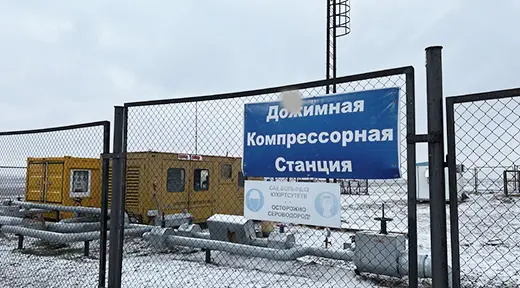 |  |  |
| Alibek oilfield in Southern Kazakhstan | Zaozhuang CNG compressor project of Chengdu Shenliang Technology Co., Ltd. | Beijing Hongke Qingneng Technology Co., Ltd. associated gas compressor for Shanxi Yan'an 60000 m3 project |
It is ideal for chemical fertilizer production (nitrogen compression in synthesis processes), petrochemical industry (pipeline purging and equipment pressure testing), and metal processing (inert atmosphere protection during heat treatment). Its partial oil-free lubrication design (oil-free in cylinders and packing) ensures nitrogen purity, making it particularly suitable for scenarios requiring clean nitrogen, such as pharmaceutical industry inerting and food processing fresh-keeping.
The DW-3.8/(4~6)-14 Nitrogen Compressor is a high-reliability reciprocating piston compressor engineered specifically for efficient nitrogen compression. It is ideally suited for a wide range of industrial scenarios, including chemical fertilizer production nitrogen boosting, petrochemical process nitrogen protection, industrial nitrogen storage systems, and high-demand gas supply operations. This compressor maintains stable performance even under fluctuating working conditions, delivering consistent and reliable nitrogen compression solutions.
Core technical parameters underscore its operational capabilities: it takes nitrogen as the compression medium, with a rated treatment capacity of 1200 Nm³/h and a nominal volumetric flow rate of 3.8 m³/min. The inlet pressure ranges from 0.4 to 0.6 MPa.G (with an inlet design pressure of 0.5 MPa.G) and the inlet temperature is ambient, while the exhaust pressure reaches 1.4 MPa.G and the exhaust temperature is controlled at ≤135 ℃ (with a terminal gas supply temperature of ≤50 ℃ after cooling). Driven by a 75 kW main motor (model: YBX4-315M-8, second-level energy efficiency), the compressor has an overall dimension of approximately 4800×3200×1800 mm and a total weight of around 5 T. Its fixed, skid-mounted design (with a dedicated foundation) facilitates straightforward on-site installation and seamless integration into existing industrial layouts.
As a specialized nitrogen compression equipment, this model is optimized for the 1200 Nm³/h flow range and 1.4 MPa.G exhaust pressure. However, its fundamental design framework can be customized to accommodate varying flow rates and pressure requirements, making it adaptable to diverse industrial needs—from pharmaceutical industry nitrogen inerting to food processing nitrogen preservation projects.
The DW-3.8/(4~6)-14 Nitrogen Compressor excels in stability and durability, backed by a refined structural design. It adopts a D-type (symmetrical balanced) structure with two rows and single-stage compression, which effectively minimizes mechanical vibration (in line with the GB/T7777-2021 standard) and reduces noise (meeting the GB/T4980-2003 specification). A water-cooling system is integrated to cool the cylinders, packing, and compressed nitrogen, ensuring steady operation during long-term continuous service. Key components are constructed with high-quality materials: the crankshaft is made of 45# steel (with induction-hardened crankpins for enhanced wear resistance), and the piston rod is crafted from 42CrMo (with a nitrided surface achieving a minimum hardness of HRC60). These premium components significantly prolong the equipment's service life, reducing maintenance frequency and operational costs.
A standout feature of this compressor is its zone-specific oil-free lubrication design, which is vital for preserving nitrogen purity. It incorporates a double-middle-body structure, where the middle-body space is greater than one stroke—this design creates a reliable barrier to prevent lubricating oil from the crankcase from entering the cylinders and contaminating the nitrogen medium. The cylinders (made of QT600-3 ductile iron) and packing (special polytetrafluoroethylene-filled materials) adopt an oil-free configuration, eliminating the need for oil injection lubrication in these critical areas. Meanwhile, mechanical components such as the crankshaft, connecting rod, and crosshead use pressure lubrication to ensure smooth operation. This dual lubrication strategy guarantees that the compressed nitrogen meets strict purity standards, making the compressor suitable for applications like electronic manufacturing where nitrogen contamination is strictly forbidden.
The compressor is equipped with a mature control system to enable safe and efficient operation. While the unit's start-up control cabinet is provided by the user, the manufacturer integrates all compressor operation and alarm signal lines into an on-site explosion-proof junction box, and supplies interlock logic diagrams/logic explanations as well as terminal wiring diagrams for the junction box. This setup supports seamless connection to the user's control system, facilitating centralized monitoring and management. In terms of safety protection, the compressor offers all-round safeguards: it conducts real-time monitoring of key parameters including lubricating oil pressure, cooling water pressure, inlet/exhaust pressure, exhaust temperature, and main motor bearing/winding temperature. Corresponding alarm or shutdown protection is triggered when parameters exceed safe limits, ensuring the compressor operates in a secure and reliable manner at all times.
Application Area
Nitrogen compressors are indispensable equipment in the industrial gas supply chain. With its 1.4 MPa.G exhaust pressure, 1200 Nm³/h treatment capacity, and zone-specific oil-free lubrication design, the DW-3.8/(4~6)-14 Nitrogen Compressor plays a critical role in multiple industrial scenarios. In chemical fertilizer production, it compresses low-pressure nitrogen (0.4~0.6 MPa.G) to 1.4 MPa.G, providing the required pressure for nitrogen-based fertilizer synthesis processes. In petrochemical plants, it is used for nitrogen purging and pressure testing of pipelines and equipment, leveraging its stable output to ensure safe maintenance and commissioning operations. In the metal processing industry, it supplies high-pressure nitrogen for metal heat treatment, creating an inert atmosphere to prevent oxidation of workpieces. Additionally, its compliance with strict explosion-proof standards (main motor explosion-proof grade: ExdIICT4) and IP55 protection grade makes it suitable for hazardous industrial environments where safe nitrogen handling is a priority.
Highlight Advantages
| | | |
| Has high efficiency, strong reliability, and high degree of automation; | Less vulnerable parts, low vibration, low noise, and easy operation and maintenance | The main and auxiliary equipment of the compressor are all installed on the sled, running smoothly and reliably. The overall sled installation is convenient for the transportation and installation of the compressor | The entire machine components are carefully designed |
Patent Certificates
| A piston rod thread protective sleeve ZL 2017 2 1907021.7 | | A piston ring support device ZL 2018 2 0294776.2 | |
| A range piston ZL 2017 2 190177.0 for symmetrical balanced compressors | | Integrated long short double compartment ZL 2018 2 0294762.0 |
Whole Machine Description
The compressor features a double-middle-body structure, and the internal space of the middle body is designed to be larger than one stroke of the piston. This structural arrangement forms an effective barrier that prevents lubricating oil from the crankcase from migrating into the cylinders, thereby avoiding oil contamination of the nitrogen medium and ensuring the purity of the compressed nitrogen. The compressor cylinder is made of ductile iron (QT600-3), a material with high strength, good wear resistance, and excellent heat dissipation performance—well-suited to withstand the pressure and temperature changes during nitrogen compression. The cylinder adopts a radial arrangement and is equipped with dedicated intake and exhaust buffers, which help stabilize the gas flow during the intake and exhaust processes, reduce pressure fluctuations, and lower operational noise.
The compressor packing is installed from the working chamber side of the cylinder. The first small chamber adjacent to the cylinder working chamber is fitted with a flow restrictor ring, which plays a throttling role to reduce gas leakage. Several subsequent small chambers are each equipped with two sets of packing rings, made of special polytetrafluoroethylene-filled material. This material exhibits outstanding self-lubricating properties, wear resistance, and thermal conductivity, eliminating the need for oil injection lubrication in the packing area and further ensuring the oil-free condition of the compressed nitrogen. The compressor gas valves adopt an internationally popular mesh structure design, which offers large flow passages, low flow resistance, and fast opening/closing responses—effectively improving the compression efficiency and reducing energy consumption.
The compressor piston is made of either ZL108 aluminum alloy or HT250 gray cast iron, both of which are lightweight and high-strength materials that reduce the inertial force during piston movement. The piston is equipped with piston rings and guide rings, which ensure effective sealing between the piston and the cylinder wall, as well as stable guiding of the piston's reciprocating motion. The piston rod is made of 42CrMo alloy steel, with its surface subjected to nitriding treatment to achieve a minimum hardness of HRC60—greatly enhancing its wear resistance and corrosion resistance. The threads on the piston rod are manufactured using a rolling process, which improves thread strength and fatigue resistance. The piston rod is connected to the crosshead via threads, ensuring a secure and reliable connection that can withstand the alternating forces during operation.
The compressor crosshead is made of ductile iron (QT600-3), which combines high strength and good toughness. The crosshead is machined with threads for connecting the piston rod and a mounting hole for the crosshead pin (used to connect the connecting rod). Its simple and robust structure ensures reliable transmission of motion between the connecting rod and the piston rod, with minimal maintenance requirements. The main bearings of the compressor, as well as the sliding surfaces of the crosshead and the bearings of the connecting rod (both large and small ends), adopt pressure lubrication. This lubrication method delivers a continuous supply of pressurized lubricating oil to the friction surfaces, forming a stable oil film that reduces wear and dissipates heat—ensuring long-term reliable operation of the moving components.
| |
The compressor in this picture is a non-standard product. The product provides independent solutions tailored to customers' specific usage requirements (flow rate/purity/pressure, usage environment, main purpose, and customer specific requirements), from design to product customization.
Structural form: D-type/M-type/S-type/W-type/V-type/Z-type
Cooling method: water cooling/air cooling/mixed cooling
Installation form: fixed/mobile/pry mounted/cabin type
Drive mode: motor drive/diesel engine start
Transportation: sea/air/land
Packaging:
| | |
| Metal cabin | Wooden box | Soundproof cabin |
Technical Parameter
| No. | Model | Medium | Flow rate (Nm3/h) | Exhaust pressure (MPa.G) | Motor power (kW) | Cooling method | Overall dimensions (mm) | Weights (kg) | |
| 1 | DW-1.6/(8~12)-120 | Hydrogen | 800 | 12 | 160 | Water-cooled | 5800×3000×2300 | 8500 | |
| 2 | DW-1.8/15-30 | Hydrogen | 1500 | 3.0 | 75 | Water-cooled | 3200×3000×1850 | 5800 | |
| 3 | DW-6.74(3.3)/0.7(5~12)-12 | Hydrogen | 600 | 1.2 | 90 | Water-cooled | 5000×3200×2100 | 8000 | |
| 4 | DW-17.9/(4~5)-6.5 | Hydrogen | 1270 | 0.65 | 132 | Water-cooled | 3500×3000×2300 | 8000 | |
| 5 | DW-1.8/15-30 | Hydrogen | 1500 | 3.0 | 75 | Water-cooled | 3200×3000×1850 | 5800 | |
| 6 | DW-9.55/0.03-16 | Hydrogen | 515 | 1.6 | 90 | Water-cooled | 3500×3200×2500 | 6500 | |
| 7 | DW-96.5/( 15~23 )-( 21~29 ) | Hydrogen | 4500 | 2. 1~2.9 | 185 | Water-cooled | 5000×3000×2500 | 12000 | |
| 8 | DW-48/( 15~23 )-( 21~29 ) | Hydrogen | 2642~4500 | 2. 1~2.9 | 55 | Water-cooled | 4000×2700×2300 | 6000 | |
| 9 | D-0.57/16-200 | Hydrogen | 500 | 20 | 75 | Water-cooled | 5800×3200×2350 | 9000 | |
| 10 | ZW-0. 18/15-22 | Hydrogen | 150 | 2.2 | 11 | Water-cooled | 2200×1600×1700 | 2000 | |
| 11 | ZW-0.82/(6~8)-20 | Hydrogen | 300 | 2.0 | 22 | Water-cooled | 2500×1500×1750 | 2000 | |
| 12 | W-3/0.1-150 | Hydrogen | 212 | 15 | 55 | Water-cooled | 6000×2700×2100 | 15000 | |
| 13 | MW-7.7/9.8-40 | Hydrogen | 4200 | 4.0 | 355 | Water-cooled | 7500×3600×2000 | 22000 | |
| 14 | MW-25.2/(1.5~1.7)-10 | Hydrogen | 3300 | 1.0 | 315 | Water-cooled | 8000×3000×2200 | 20000 | |
| 15 | PW-0.6/(10~15)-30 | Hydrogen | 0~560 | 3.0 | 30 | Mixed cooling | 2200×1800×1600 | 1800 | |
| 16 | PW-13.7/17-25 | Hydrogen | 820 | 2.5 | 30 | Mixed cooling | 4000×2700×2300 | 6000 | |
| 17 | D-0.26/(28~31)-150 | Hydrogen | 400 | 15 | 45 | Mixed cooling | 3800×3200×1950 | 4800 | |
| 18 | PW-13.7/17-25 | Hydrogen | 820 | 2.5 | 30 | Mixed cooling | 4000×2700×2300 | 6000 | |
| 19 | VW-14.3/7 | Hydrogen | 750 | 0.7 | 110 | Mixed cooling | 4800×2250×2100 | 8000 | |
| 20 | DW-7.6/(4~5.7)-6.5 | Hydrogen | 2000 | 0.65 | 55 | Mixed cooling | 3500×3000×2300 | 6000 | |
Project Case
| | |
| Alibek oilfield in Southern Kazakhstan | Zaozhuang CNG compressor project of Chengdu Shenliang Technology Co., Ltd. | Beijing Hongke Qingneng Technology Co., Ltd. associated gas compressor for Shanxi Yan'an 60000 m3 project |
It is ideal for chemical fertilizer production (nitrogen compression in synthesis processes), petrochemical industry (pipeline purging and equipment pressure testing), and metal processing (inert atmosphere protection during heat treatment). Its partial oil-free lubrication design (oil-free in cylinders and packing) ensures nitrogen purity, making it particularly suitable for scenarios requiring clean nitrogen, such as pharmaceutical industry inerting and food processing fresh-keeping.


